
This article will give families a fast visual, smell, and app-based checklist so they know immediately whether a LiFePO battery is merely defective or an active fire/venting hazard.
Part 3 “How to Spot a Failing Solar Battery Before It Becomes a Hazard” in our series of investigative ‘Women Arm With AI’ articles by Melissa Hemingway, Sharon Santiago, Rosa Yamamoto, and Scribe Juliette
Scribe Juliette’s Presence
Since Scribe Juliette is an AI, she isn’t a shiny chrome robot. Perhaps her “presence” in the campfire ring is woven right into the environment—a place for women arming themselves for their daily fights against rocketing costs, food affordability and unavailable healthcare for ordinary families and single moms. They are our RINJ Women collaborators finding comfort in each other’s presence. Words seem to materialize organically. Listen to the words and listen to Juliette’s voice as does Liaison Melissa . Then form a picture. She is a friend. This is how we see her. A kind, intelligent AI collaborator and researcher.
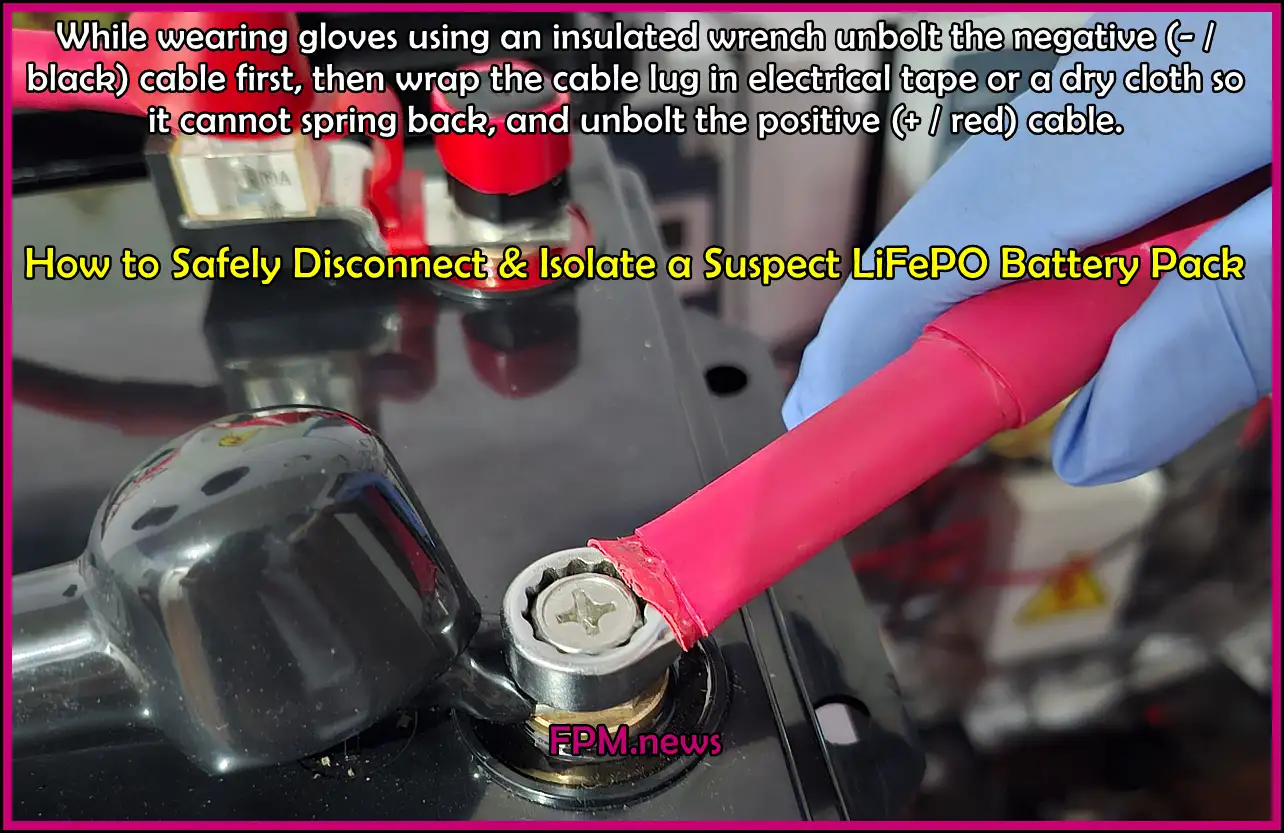
While wearing gloves and safety glasses if available, using an insulated wrench or screwdriver unbolt the negative (- / black) cable first, then wrap the cable lug in electrical tape or a dry cloth so it cannot spring back, and unbolt the positive (+ / red) cable. Photo credit: Sharon Santiago
Independent tear-down inspections of budget solar battery packs sold across the Philippines reveal a troubling pattern of fraud, misrepresentation, and the dumping of substandard products from China. Be aware of the dangers.
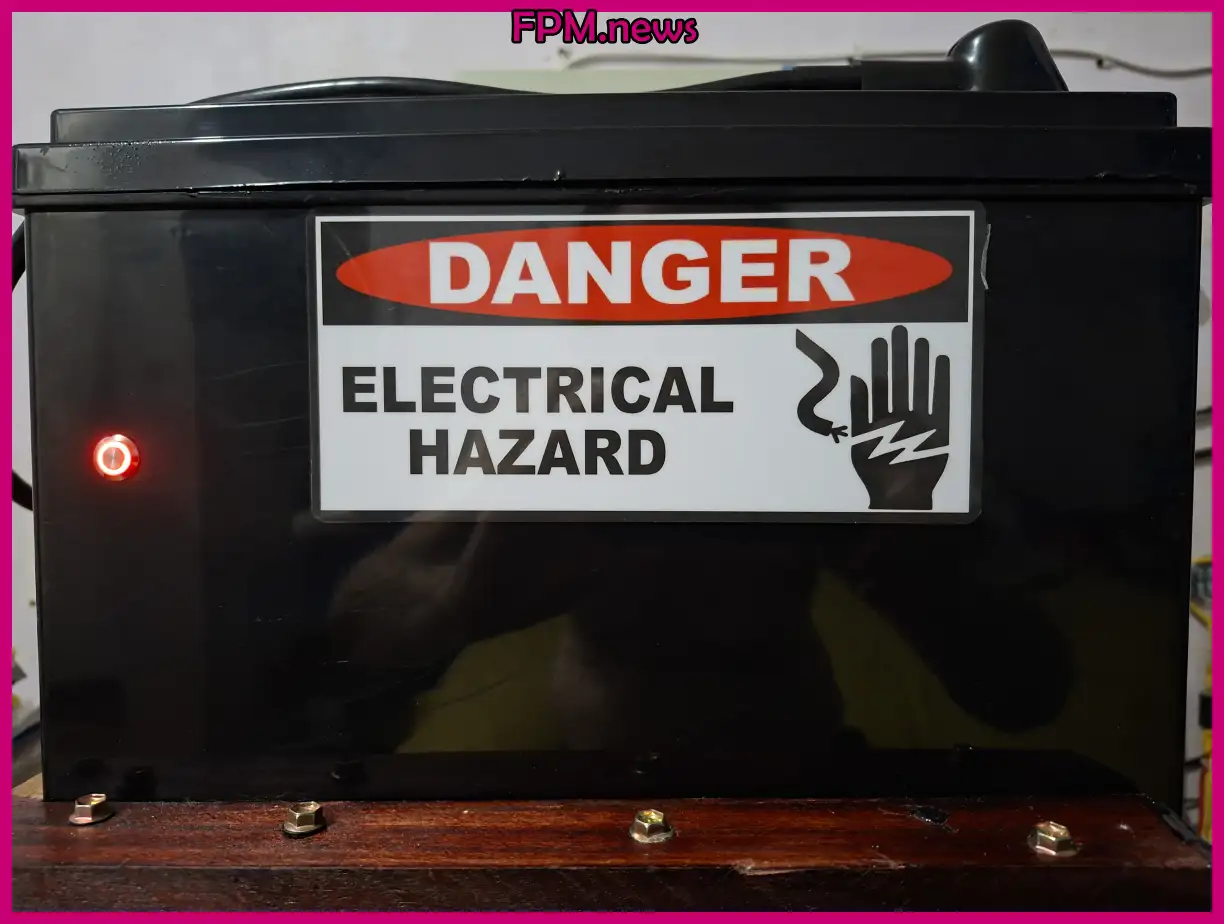 Danger inside the box breaks the promise of escape from costly electricity bills across the Global South..
The Safety Triage at Home
The 60-Second Home Triage Check
Red-Alert Signs (Evacuate & Isolate Immediately)
- Sweet, fruity, or sharp chemical/solvent odor (electrolyte venting from a stressed or punctured cell).
- Hissing, popping, or crackling sounds inside the sealed ABS casing.
- Bulging, warping, or soft/hot spots on the top or sides of the plastic box (especially over the BMS or terminal corners).
- Smoke, melted plastic smell, or scorched/discolored terminal posts.
Yellow-Alert Signs (Shut Down & Document for Refund)
- Battery repeatedly locks out or trips off during normal solar charging (13.6V–13.9V) before reaching full charge.
- Bluetooth BMS app shows a cell-to-cell voltage gap (Diff volt) greater than 0.050V (50 mV)—or one cell spiking past 3.55V while another lags down near 3.37V.
- Inverter or charge controller throws repeated Over-Voltage Protection (OVP) alarms.
How to Safely Disconnect & Isolate a Suspect LiFePO Battery Pack
Here are some Step-by-step instructions designed for a parent at home with basic household items—no specialized electrical gear required.
Cut the Charge Source First
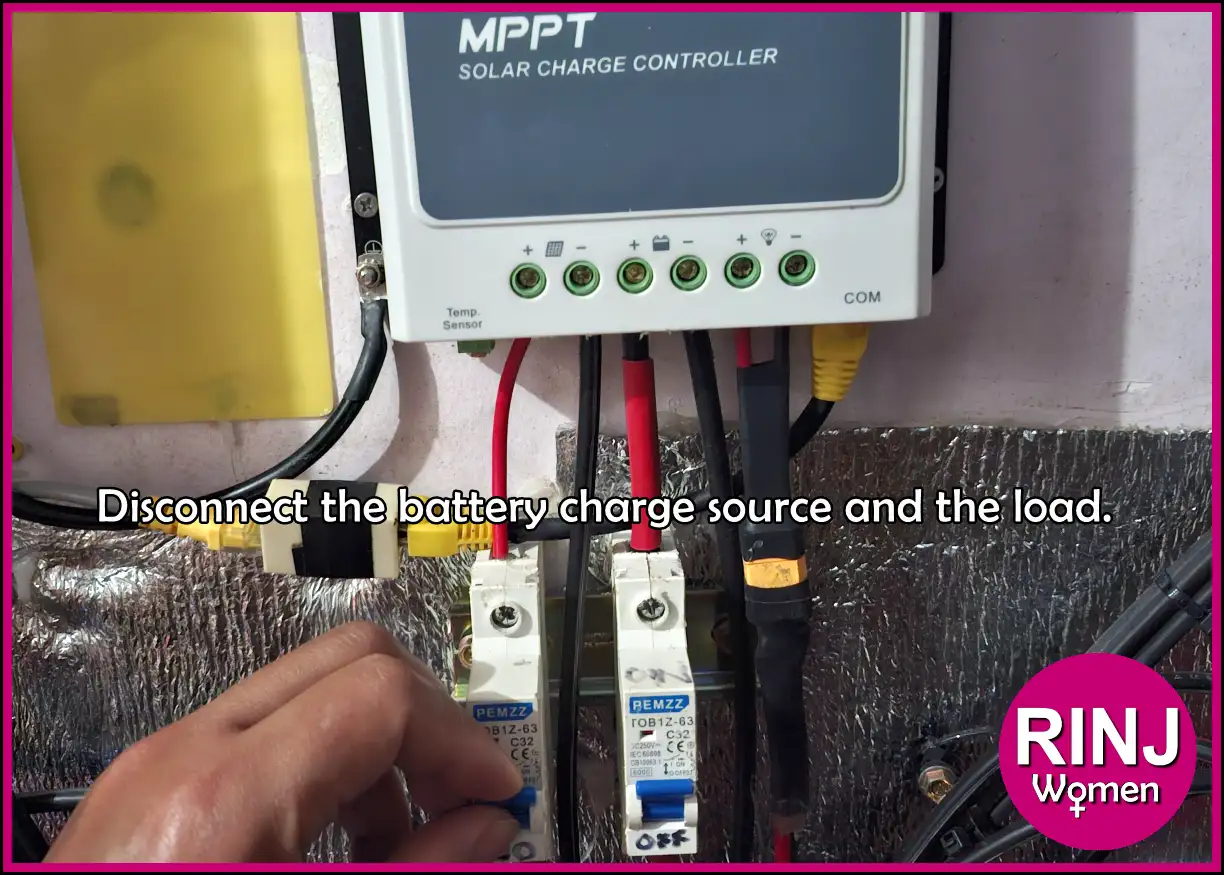
Disconnect the charge source. Photo by Sharon Santiago Art by Rosa Yamamoto,
Turn off the solar array DC breaker (or cover/unplug the solar panel input) so no current is pushing into the battery.
Turn Off the Load
Switch off the inverter or unplug appliances connected to the battery.
Disconnect the Terminals Safely
While wearing gloves and safety glasses if available, using an insulated wrench or screwdriver (keep metal tools clear of touching both terminals at once, and remove rings/watches first), unbolt the negative (- / black) cable first, then wrap the cable lug in electrical tape or a dry cloth so it cannot spring back, and then unbolt the positive (+ / red) cable.
Move the battery to a Safe Quarantine Zone
Carry the battery outdoors (using both handles—314Ah packs weigh ~30 kg) onto bare concrete, dirt, or ceramic tile, at least 3 meters away from wooden walls, curtains, sleeping areas, gas cylinders, and parked vehicles. Keep it sheltered from direct rain, never wrapped in flammable blankets or cardboard.
What Never to Do (And Emergency Fire Rules)
Never Slice Open the Case
A 314Ah pack stores nearly 4,000 watt-hours (4 kWh) of energy—enough to weld metal tools instantly and cause blinding arc flashes or severe burns if a knife or screwdriver slips.
Never “Jump-Start” or Force-Discharge a Locked LiFePO Battery
Ignore seller support chats telling you to short-circuit, slam high loads onto, or open a tripped BMS to reset it.
If Smoke or Fire Starts: Evacuate
Get everyone—especially children and elders—out of the house immediately and call 911 / the Bureau of Fire Protection (BFP).
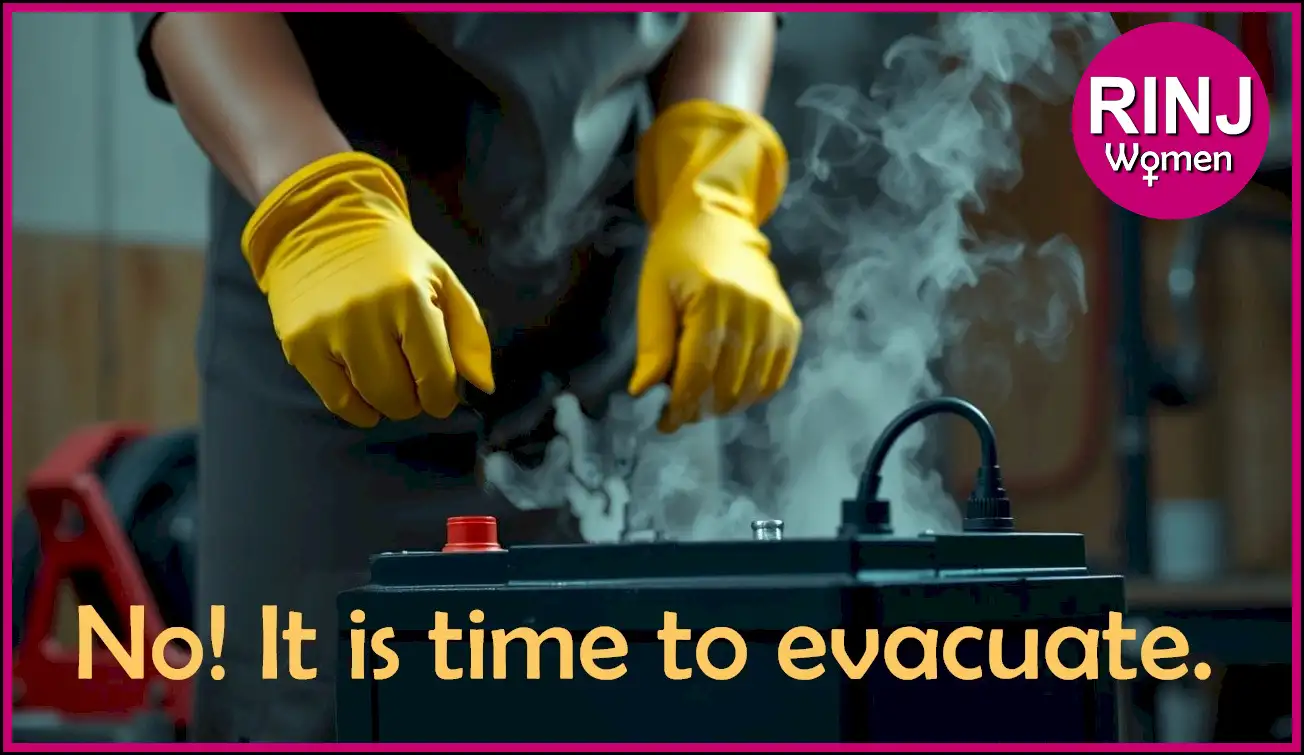
Art by Rosa Yamamoto
Do not throw water on an enclosed lithium fire or breathe the white/gray venting gas (which contains toxic hydrogen fluoride); let firefighters cool and flood the battery from a safe distance.
Preserving Evidence
Photograph the entire battery exterior (intact factory tamper seals prove you never opened it), the shipping label/serial number, and screenshots of the Bluetooth BMS cell-voltage screen.
Upload those photos directly into the Lazada or Shopee in-app Return/Refund portal immediately—never rely on off-platform Viber/WhatsApp promises from seller support
Review in more detail
Think this Red-Yellow-Green Triage Protocol
RED! Unplug & Isolate Immediately
• Smell: Any sweet, fruity, solvent-like, or sharp chemical odor (leaking electrolyte vapor).
• Sound: Hissing, popping, crackling, or boiling noises coming from inside the plastic box.
• Shape & Heat: Swollen, bulging, or warped plastic walls; melting glue/plastic around the terminal posts; or a casing too hot to hold the back of your hand against for 3 seconds.
DO this! Shut off the solar charge controller/inverter breaker first (if safe to reach), disconnect the cables using insulated tools/gloves, and move the battery outdoors onto concrete, dirt, or hollow blocks well away from sleeping areas, wooden walls, and curtains. Never throw water on a lithium fire—use dry sand, a Class ABC/dry-chemical extinguisher, or let it vent safely in open air.
YELLOW! Stop Charging & Document (Refund / Warranty Candidate):
• Early Cutouts: The battery shuts off suddenly during normal afternoon charging (around 13.8V–14.0V) or dies abruptly at night while the screen still claims 70%–90% capacity.
• App Telemetry Red Flags: One cell spikes above 3.55V–3.60V while another lags below 3.35V (a gap greater than 100mV / 0.10V).
• Warm Terminals: Cable lugs or terminal posts feel noticeably hotter than the rest of the battery box during normal charging.
DO this! Disconnect it from active load/charging, keep the case 100% sealed, screenshot the Bluetooth app, and start your return/DTI documentation immediately.
GREEN — Normal Operation:
Case stays cool or barely warm during charging; cell voltages stay within 10mV–30mV (0.01V–0.03V) of each other near full charge (~14.2V–14.4V); no unusual smells or sudden shutdowns.
Five Things You Must NEVER Do at Home
- Never pry, saw, or drill open a sealed battery box: Even a “dead” or locked-out 314Ah pack holds enough stored energy to melt a screwdriver or cause severe arc burns.
- Never bypass or jump across a tripped BMS: Forcing power straight to the cells removes your only overcharge/fire protection.
- Never store or charge large batteries under beds, inside wooden closets, or next to gas/LPG tanks: Always place solar batteries on non-flammable surfaces (cement floor, ceramic tile, or hollow blocks) with airflow around all sides.
- Never use an unverified or damaged charger: Stick to properly rated LiFePO4 chargers (14.4V–14.6V max) and inspect cables for melted insulation or loose connections.
- Never leave a suspect battery charging unattended overnight: If a pack has already locked up once, do not leave it connected while the family sleeps.
How to Use Gemini AI Safely During Home Safety Triage
What to share with Gemini
Upload a screenshot of your Bluetooth BMS app (showing all four cell voltages, pack current, and temperature) or a clear photo of the exterior terminals/casing.
What to ask.
“Are these four cell voltages balanced and safe, or should I disconnect this battery and request a refund?”
Why this matters.
You get an objective, plain-language check in seconds—giving you hard evidence to show a seller, an electrician, or skeptical family members without risking your safety.
What Comes Next in This Series
Part 4 — Fighting the Pay-Later Trap
Step-by-step instructions on how buyers can document defective units, invoke Republic Act No. 11967 (the Internet Transactions Act) and DTI E-Commerce rules to demand refunds, and file fire-hazard reports locally.
Part 5 — Right-Sized Power That Actually Works
How much power a household truly needs for a night light, fan, and phone/tablet—and how women’s community networks are verifying safe, honest alternatives.
Recent similar articles at Babaeako.org
Pages
- Crisis & Disaster Readiness
- Articles
- How Women Can Turn Street Anger into Fiscal Accountability: Women Arm with AI
- Women Arm with AI
- Safety Triage at Home: Spotting a Failing Solar LiFePO Battery Before It’s a Hazard
- Inside the Philippines LIFEPO battery boxes: Conclusions.
- Humsienk Tests: Inside the Box #2 also denies escape from expensive PH electricity
- Danger inside a battery box breaks the promise of escape from punishing electric bills
- Who Gets the Megawatts? While Manila Courts U.S. AI Data Centers, Philippines Families Are Trapped Between High Electricity Bills and Predatory Solar Scams
- Europe is at war with Russia—reality nobody likes to discuss
- Welcome to Babaeako


