
With residential power hitting ₱15.55/kWh this month and 1.5 gigawatts of AI server capacity on the drawing board, mothers trying to keep a single work light and fan running after dark to craft new items to sell, are walking straight into ₱19,000 pay-later LIFEPO battery traps.
A series of investigative ‘Women Arm With AI’ articles by Melissa Hemingway, Sharon Santiago, Rosa Yamamoto, and Scribe Juliette
Scribe Juliette’s Presence
Since Scribe Juliette is an AI, she isn’t a shiny chrome robot. Perhaps her “presence” in the campfire ring is woven right into the environment—a place for women arming themselves for their daily fights against rocketing costs, food affordability and unavailable healthcare for ordinary families and single moms. They are our RINJ Women collaborators finding comfort in each other’s presence. Words seem to materialize organically. Listen to the words and listen to Juliette’s voice. Then form a picture. She is a friend. This is how we see her. A kind, intelligent collaborator and researcher.
“When the grid prioritizes 24/7 power for foreign data corridors, ordinary households are left paying ₱15.55 a kilowatt-hour—or gambling their grocery money on uncertified, factory-reject solar energy batteries,” complains Karinna Angeles, a Nurse Practitioner in Manila who works in a hospital and on weekends in a free clinic in what she describes as “the poor side of town”.
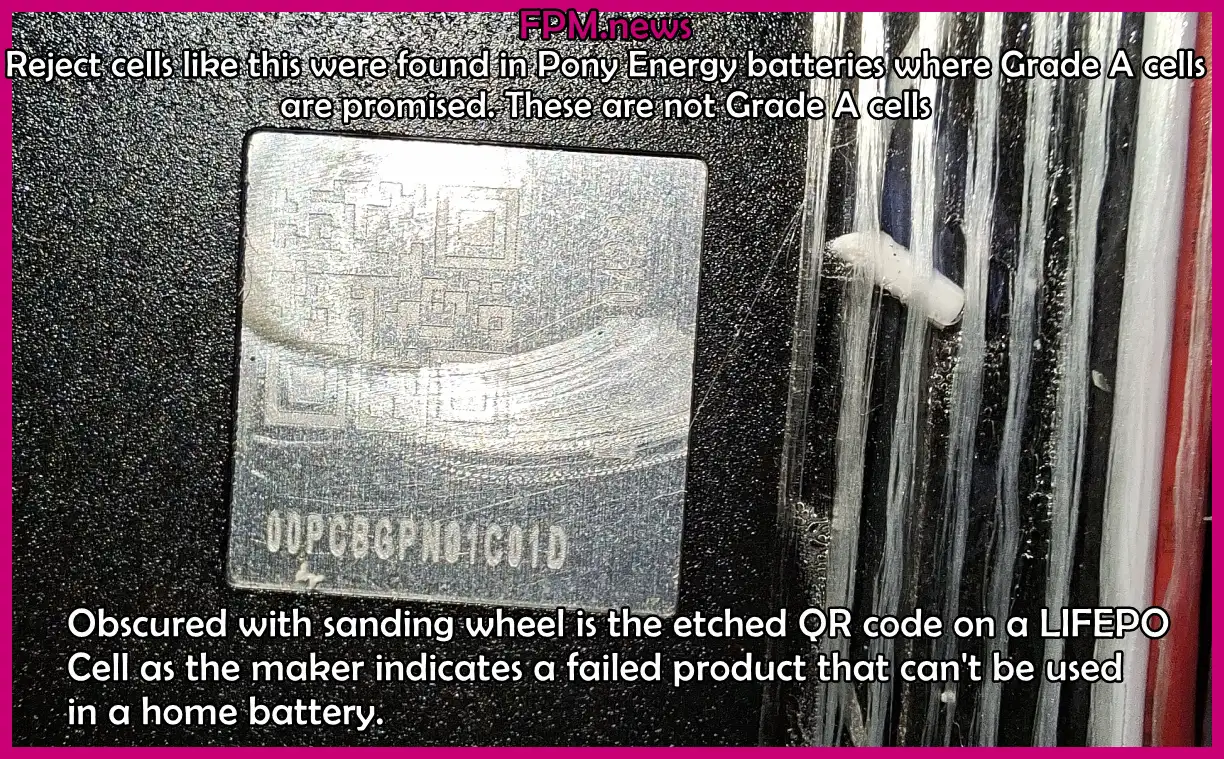
Failed 314AH 12.8 V LIFEPO Battery Cell. Obscured with a sanding wheel, reject cells like this were found in Pony Energy batteries where Grade A cells are promised. These are not Grade A cells but factory rejects.
As world leaders gather in Pasay City this week to carve out AI infrastructure corridors and security pacts, households are left fighting for affordable light after dark—and many are struggling with a ₱19,000 debt trap on sales platforms like Lazada and Shopee.
Complaint to Lazada-Pony-Energy-12v-314-AH-Battery-NOT-CHARGING
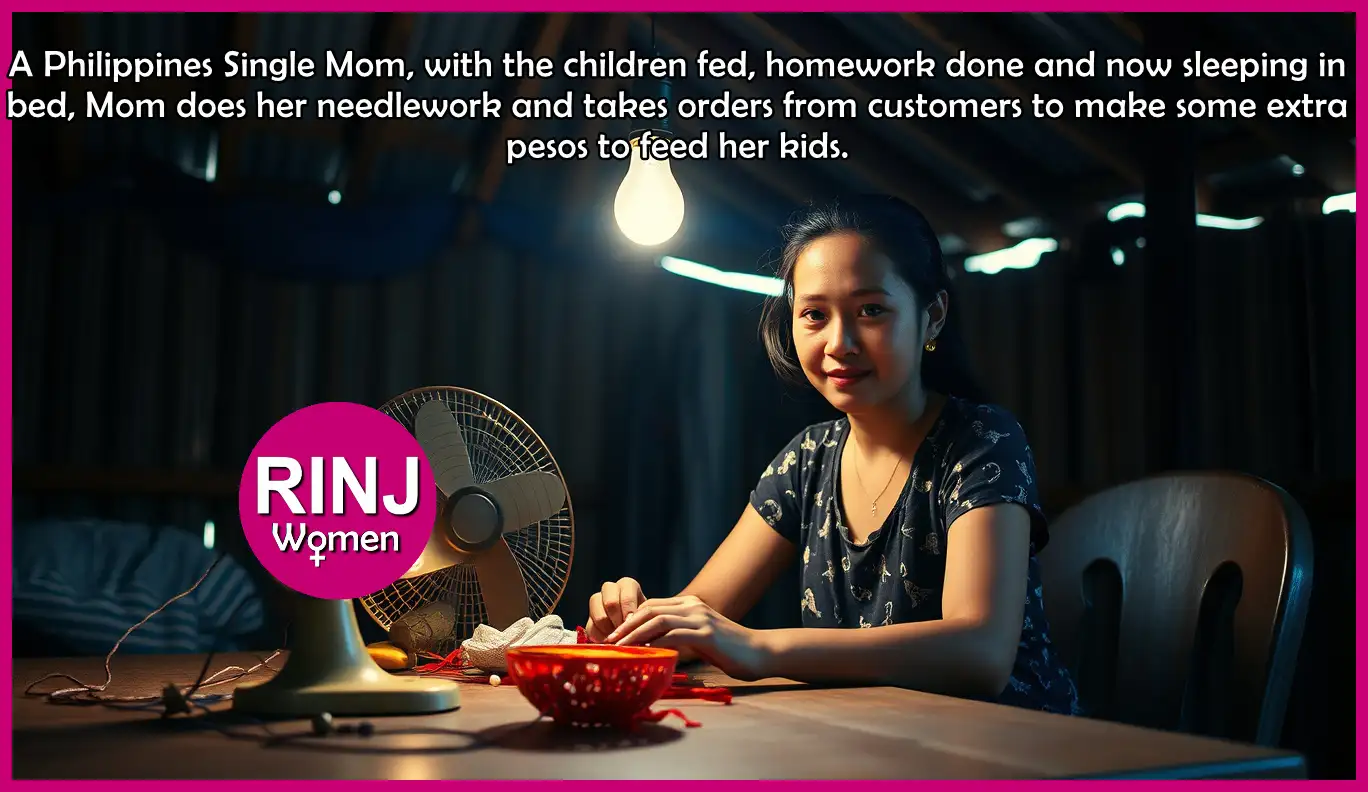
A Philippines Single Mom, with the children fed, homework done kids now sleeping in bed, Mom plans her needlework and takes orders from customers to make some extra pesos to feed her kids. Photo credit: Research and art by Rosa Yamamoto. The subject woman’s identity is somewhat obfuscated in photo art to protect the woman.
This week in Metro Manila, the contrast between official ambition and kitchen-table reality could not be sharper.
Inside the Philippine International Convention Center in Pasay City, President Ferdinand Marcos Jr. is hosting U.S. President Donald Trump and regional leaders for the ASEAN-U.S. Special Summit. High on the agenda are digital trade frameworks, U.S.-backed AI infrastructure corridors, and expanded regional security postures.
At the exact same moment, over eight million households served by Meralco are opening their November 2026 electric bills to another painful hike—pushing residential rates to ₱15.55 per kilowatt-hour, already among the highest electricity prices in Asia.
For a single mother in Luzon or Mindanao—someone who spends her daylight hours caring for children, managing school runs, and tending food crops, and can only sit down at night to do needlepoint or crafts for sale—that rate hike is not an abstract economic statistic. It is a direct tax on the three basic things she needs to earn a living after sunset: one steady LED work light, one electric fan to cut the heat, and a charged phone or tablet to take orders.
And when she tries to escape the grid by buying an affordable solar battery on a “Buy Now, Pay Later” installment plan, she is walking toward a silent, nationwide consumer disaster.
The Unwritten Recipe for an Affordability Squeeze
Nobody had to sit in a room and draft a blueprint to squeeze ordinary Filipino households. Instead, three converging forces are doing it automatically:
A Massive AI Power Grab on a Razor-Thin Grid
Under the $34.4 billion Philippine AI+ Infrastructure Masterplan (2026–2033), Manila is racing to build 1.5 gigawatts (1,500 megawatts) of AI data center capacity—anchored around Metro Manila, Laguna, Clark, and Bataan—with immediate power needs leaning on natural gas and grid interconnects.
Hyperscale AI data centers consume colossal amounts of electricity and cooling water 24 hours a day while creating very few permanent local jobs once construction ends. Every new substation and transmission line built to guarantee uninterrupted power for foreign tech servers puts upward pressure on distribution and transmission charges—costs already climbing on ordinary families’ bills.
Inside the LIFEPO Home Solar Battery ₱19,000 Sale “Pay-Later” Trap
On paper, a ₱19,000 lithium battery box bought on an installment app looks like salvation: a mother can pay a small monthly amount out of her nightly craft earnings and finally stop worrying about ₱15.55/kWh bills with sudden brownouts.
In reality, independent tear-down inspections of budget solar battery packs sold across the Philippines reveal a disturbing pattern of fraud, deception and bad product dumping from China.
Factory Rejects Sold as New Grade A cells (Pony Energy)
Industry technicians examining the internal cells of several low-cost units confirmed that the packs are built from mismatched, factory “B-grade” or engineering-reject cells—components never intended for commercial home use.
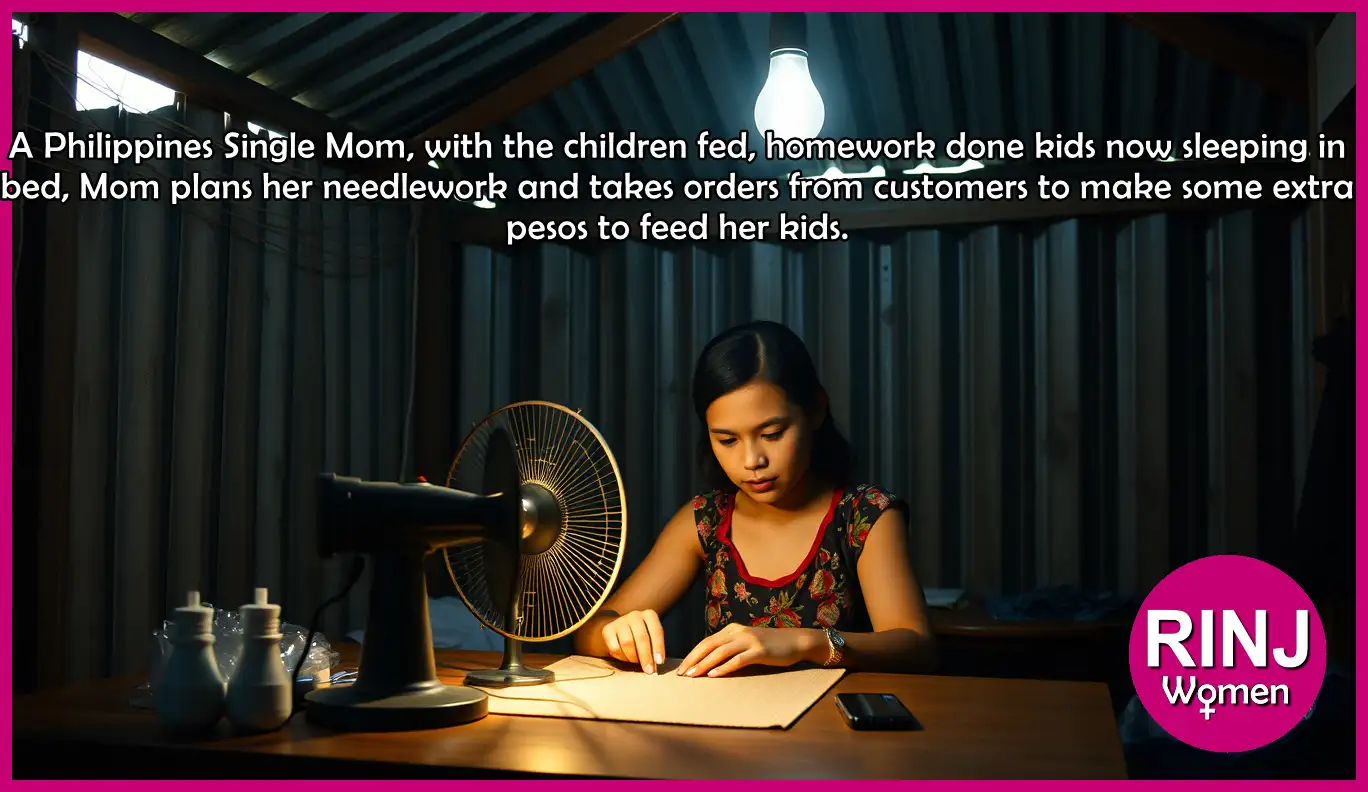
A Philippines Single Mom, with the children fed, homework done kids now sleeping in bed, Mom plans her needlework and takes orders from customers to make some extra pesos to feed her kids. Research and art by Rosa Yamamoto. Subject woman is obfuscated in photo art to protect the woman.
Stripped-Down or Counterfeit Electronics
Even when a rare unit contains decent raw storage cells, assemblers frequently cut corners on the most critical safety component: the Battery Management System (BMS). Missing temperature sensors, undersized circuits, and fake balancing boards leave the battery unable to deliver its advertised capacity—or worse, unprotected against dangerous overheating.
Fire and Smoke Hazards in Living Spaces
When reject cells meet faulty electronics likke passive 40 MV balancers in a massive 314 ampere battery, the result isn’t just a dead battery. Families are reporting units running dangerously hot, smoking out rooms, and creating severe fire hazards right next to where children sleep.
The True Cost of Making It Safe
In our team’s technical tests, taking a ₱19,000–₱24,000 unit with salvageable raw cells and rebuilding it to genuinely safe standards—upgrading the BMS (JIKONG Smart BMS Active Balance Protection Board) for something like a 2-3,000 peso and custom-rewiring every connection—pushed the real cost to nearly ₱28,000–₱30,000, requiring master-level technical labor that almost no ordinary buyer can access. Worse still, some reject-built models cannot be safely repaired at all because of fire, toxin release or explosion danger.
Meanwhile, when a bargain battery fails in month two, the “Buy Now, Pay Later” app does not stop billing. The mother is left with a dead or dangerous box in the corner, her regular electric bill still running, and months of installment debt still owed.
Regulators Look Away While Dumping Escalates
Despite formal written warnings sent to government agencies regarding hazardous, uncertified battery packs entering the Philippine market, enforcement on the ground has lagged far behind the flood of shipments. Dangerous-LIFEPO4-batteries-Warning-to-officials
While standards officials recently moved to bring Battery Energy Storage Systems (BESS) under mandatory certification rules—with phased compliance windows stretching out over one to three years—unscrupulous importers and online middlemen are using the transition gap to dump uncertified, stripped-down stock into provincial households as fast as possible.
Ordinary Filipinos are being asked to bear the environmental strain, the grid-upgrade costs, and the geopolitical risks of hosting foreign data corridors and military infrastructure—while being denied the most basic consumer safety protections in their own homes.
What Comes Next in This Series
In the coming installments of this investigation, we will put the receipts and practical tools directly into the hands of families:
Part 2 — Inside the Boxes
Side-by-side tear-down photographs showing what is actually wired inside ₱18,000–₱24,000 Philippine-market battery units compared to safe, global-standard builds—alongside the dated warning letters sent to regulators.
Part 3 — Safety Triage at Home
A visual and video guide showing the immediate warning signs of an overheating lithium pack, which units should never be opened or repaired, and how to isolate a suspect battery safely away from your family.
Part 4 — Fighting the Pay-Later Trap
Step-by-step instructions on how buyers can document defective units, invoke Republic Act No. 11967 (the Internet Transactions Act) and DTI E-Commerce rules to demand refunds, and file fire-hazard reports locally.
Part 5 — Right-Sized Power That Actually Works
How much power a household truly needs for a night light, fan, and phone/tablet—and how women’s community networks are verifying safe, honest alternatives.


