


Inside The Box I.
“Image and video in this article shows a teardown-removed BMS from a Philippines Pony Energy LIFEPO 4 12V 314AH Battery which appears to have been salvaged with parts from another battery where it was previously used. This battery, sold as new, under warranty for five years, is likely a customer return, patched up and put back into stock,” say techs.
As world leaders gather in Pasay City this week to carve out AI infrastructure corridors and security pacts, Filipino households fight for affordable light after dark starting after 18:00 hrs this time of year—and many are struggling with a ₱19,000 debt trap on sales platforms like Lazada and Shopee.
On paper, a ₱19,000 lithium iron phosphate battery box purchased through an installment app should offer relief: a mother can make modest monthly payments from her nightly craft earnings and potentially reduce the burden of ₱15.55/kWh bills during unexpected brownouts.
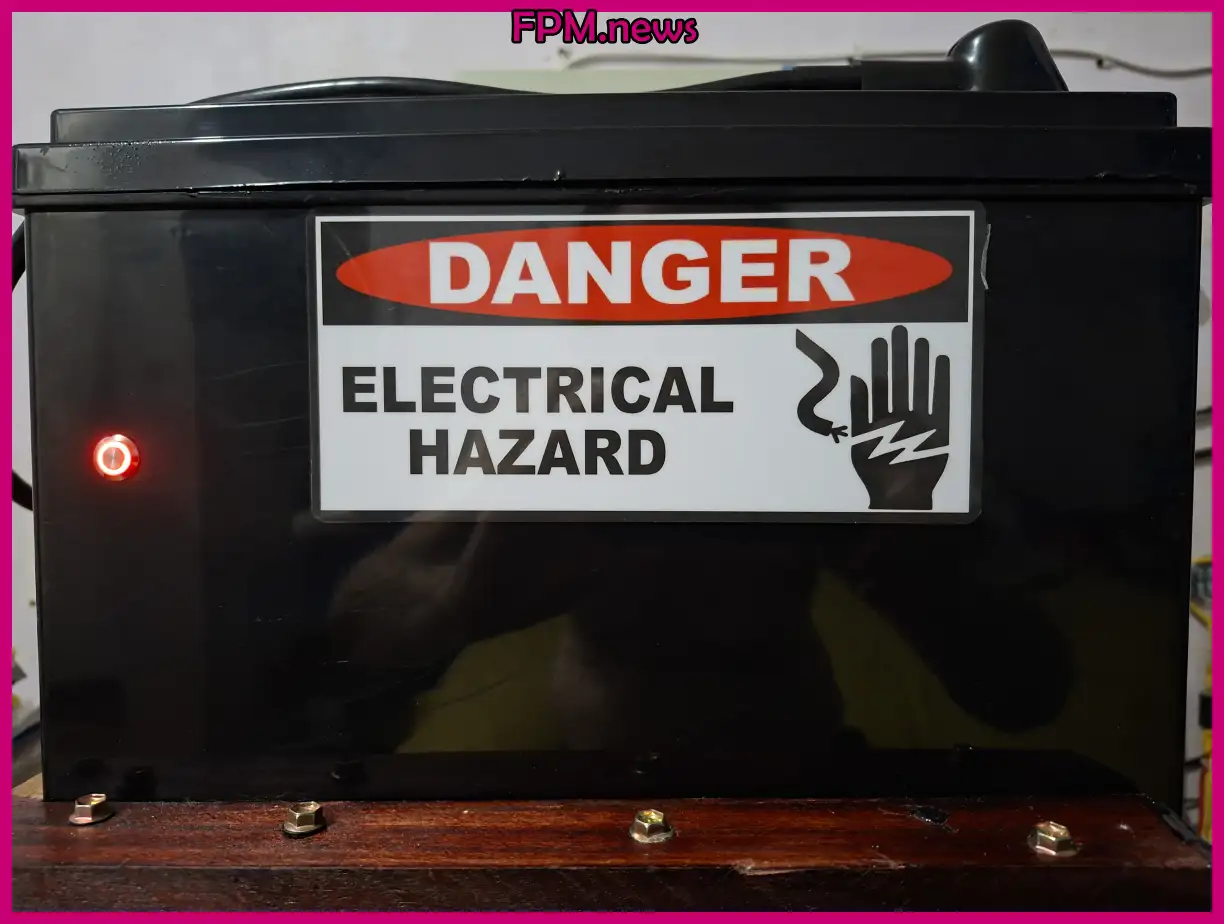
Danger inside the box breaks the promise of escape from costly electricity bills. Photo by Micheal John. Art, cropping, enhancement by Rosa Yamamoto / FPM.news
In practice, however, independent tear-down inspections of budget solar battery packs sold across the Philippines reveal a troubling pattern of fraud, misrepresentation, and the dumping of substandard products from China.
Part 2 of the series is: Inside the box which is the second installment in a new series of investigative ‘Women Arm With AI’ articles by Melissa Hemingway, Sharon Santiago, Rosa Yamamoto, and Scribe Juliette
Scribe Juliette’s Presence
Since Scribe Juliette is an AI, she isn’t a shiny chrome robot. Perhaps her “presence” in the campfire ring is woven right into the environment—a place for women arming themselves for their daily fights against rocketing costs, food affordability and unavailable healthcare for ordinary families and single moms. They are our RINJ Women collaborators finding comfort in each other’s presence. Words seem to materialize organically. Listen to the words and listen to Juliette’s voice as does Liaison Melissa . Then form a picture. She is a friend. This is how we see her. A kind, intelligent AI collaborator and researcher.
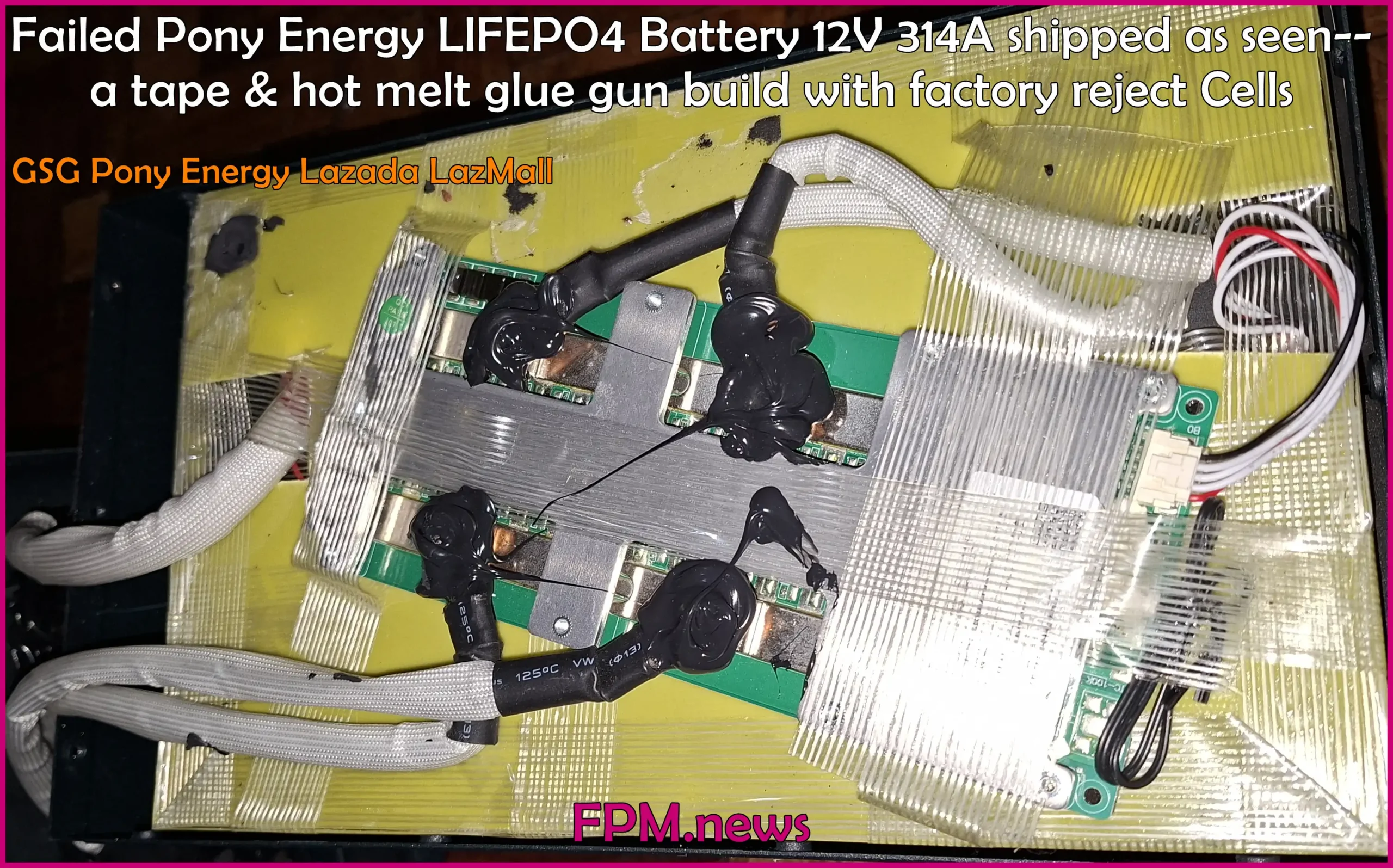
Failed Pony Energy LIFEPO4 Battery Type: 12V 314AH. Shipped as seen here, this is a tape & hot melt glue gun build with factory reject Cells and bought from GSG Pony Energy, via Lazada, Laz Mall. Photo by Sharon Santiago
Instead of rigid standoffs and mechanical strain relief, the Battery Management System (BMS) is strapped down with filament tape, while thick globs of low-temperature black hot-melt glue cover the main power lugs—leaving melted strings and pooled plastic across the board as components heat up under load. Meanwhile, the thermal sensor (NTC-100, bottom left) is coiled loosely at the edge of the board rather than mounted directly to the battery cells.
Inside the box
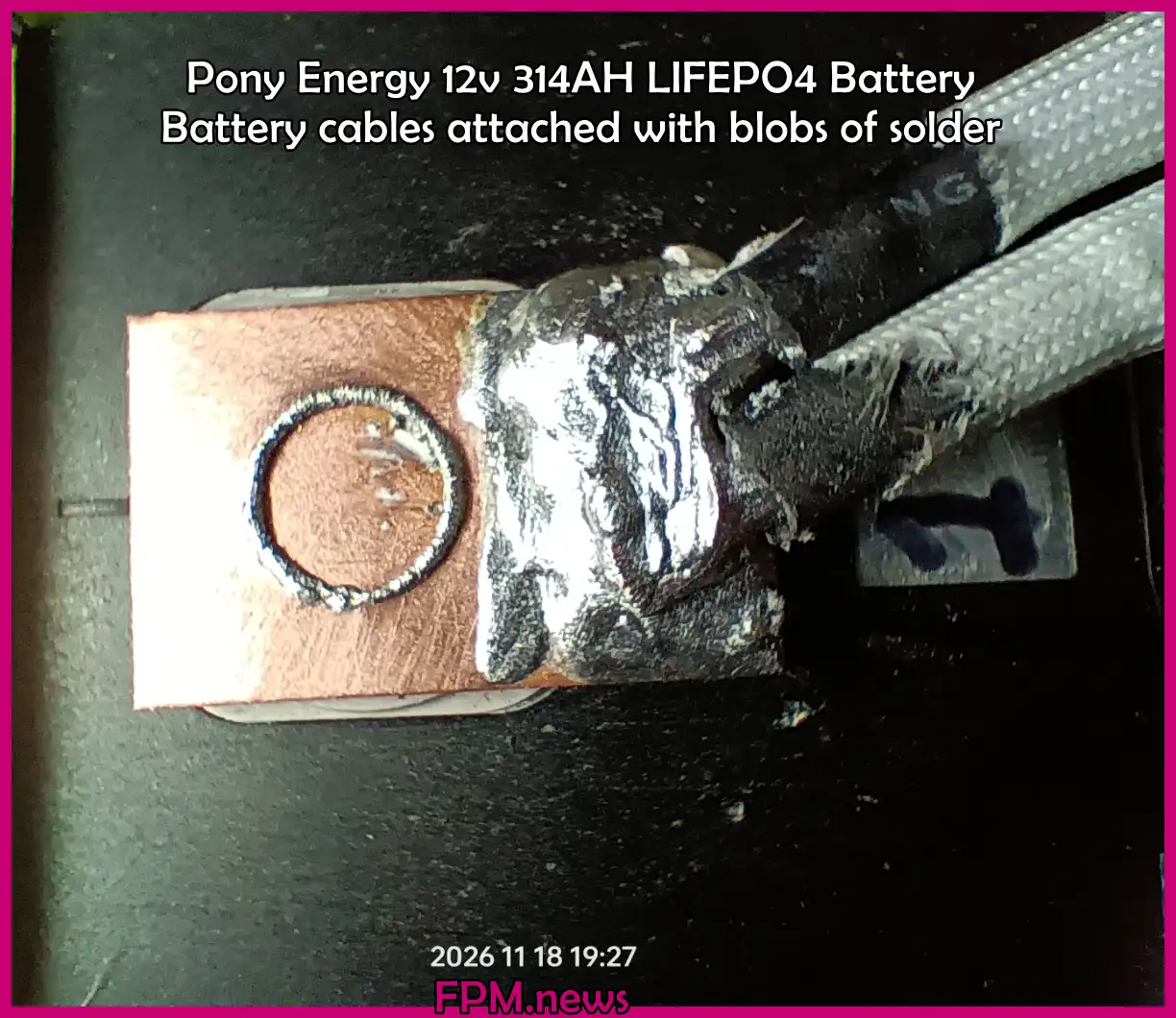
Pony Energy 12v 314AH LIFEPO4 Battery Battery cables attached with blobs of solder
Photo Credit: Sharon Santiago
Art, cropping, by Rosa Yamamoto / FPM.news
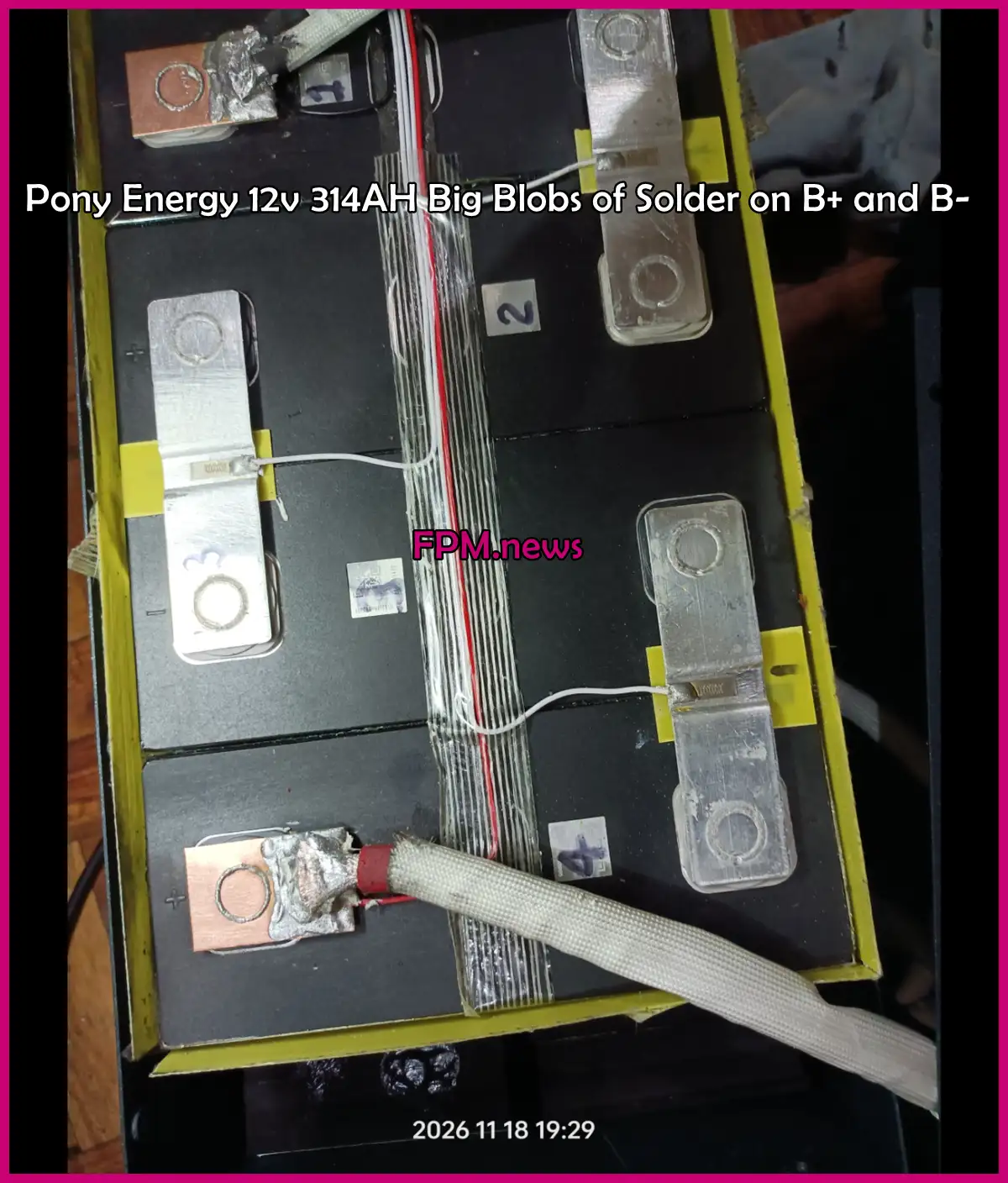
Pony Energy 12v 314AH LIFEPO4 Battery Battery cables attached with blobs of solder
Photo Credit: Sharon Santiago
Art, cropping, by Rosa Yamamoto / FPM.news
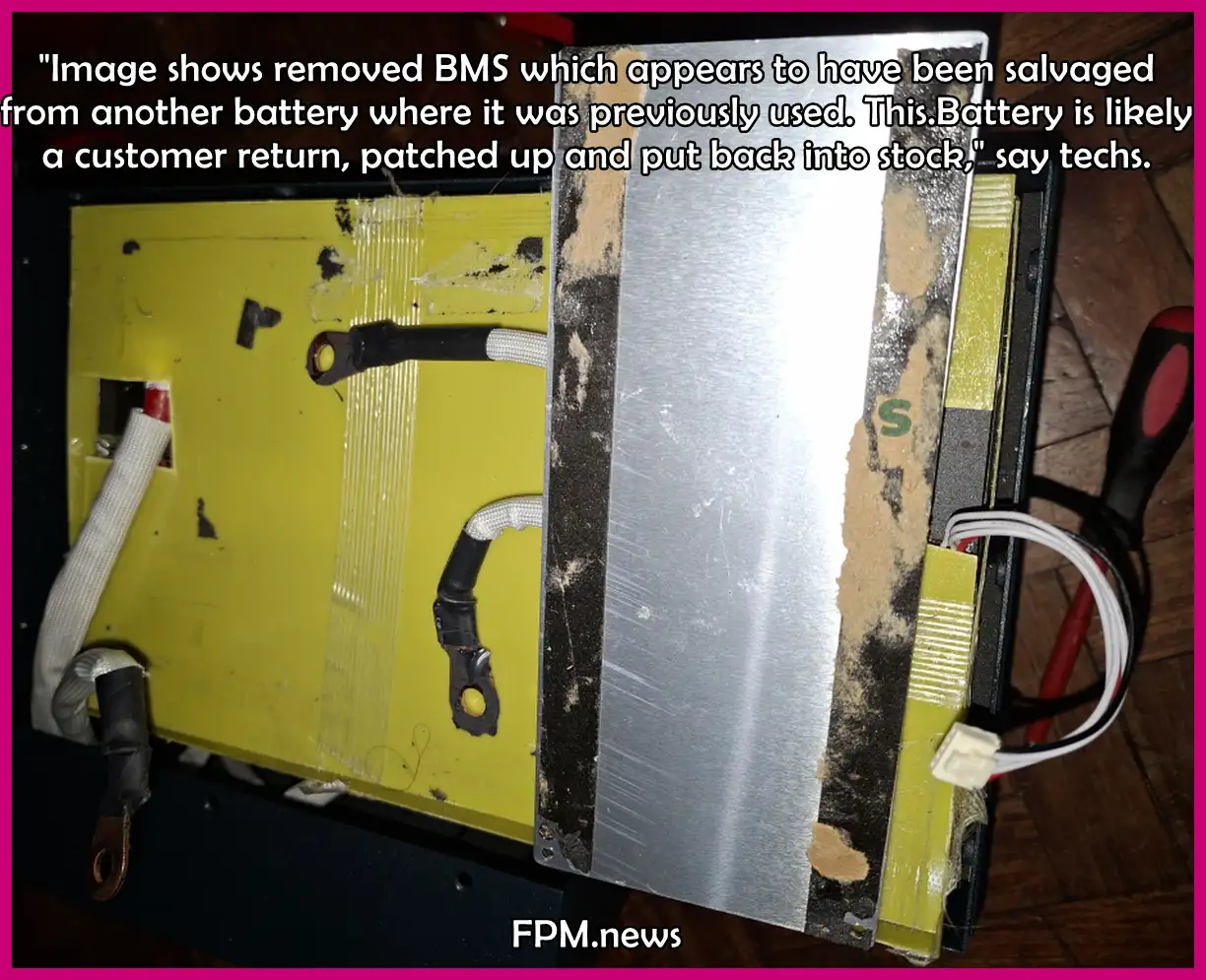
Pony Energy 12v 314AH LIFEPO4 Battery with what appears to be a salvaged BMS from another customer return.
Photo Credit: Sharon Santiago
Art, cropping, by Rosa Yamamoto / FPM.news
“Image and video shows teardown-removed BMS which appears to have been salvaged from another battery where it was previously used. This battery is likely a customer return, patched up and put back into stock,” say techs.

Zero Mechanical Mounting (Tape-Only Retention)
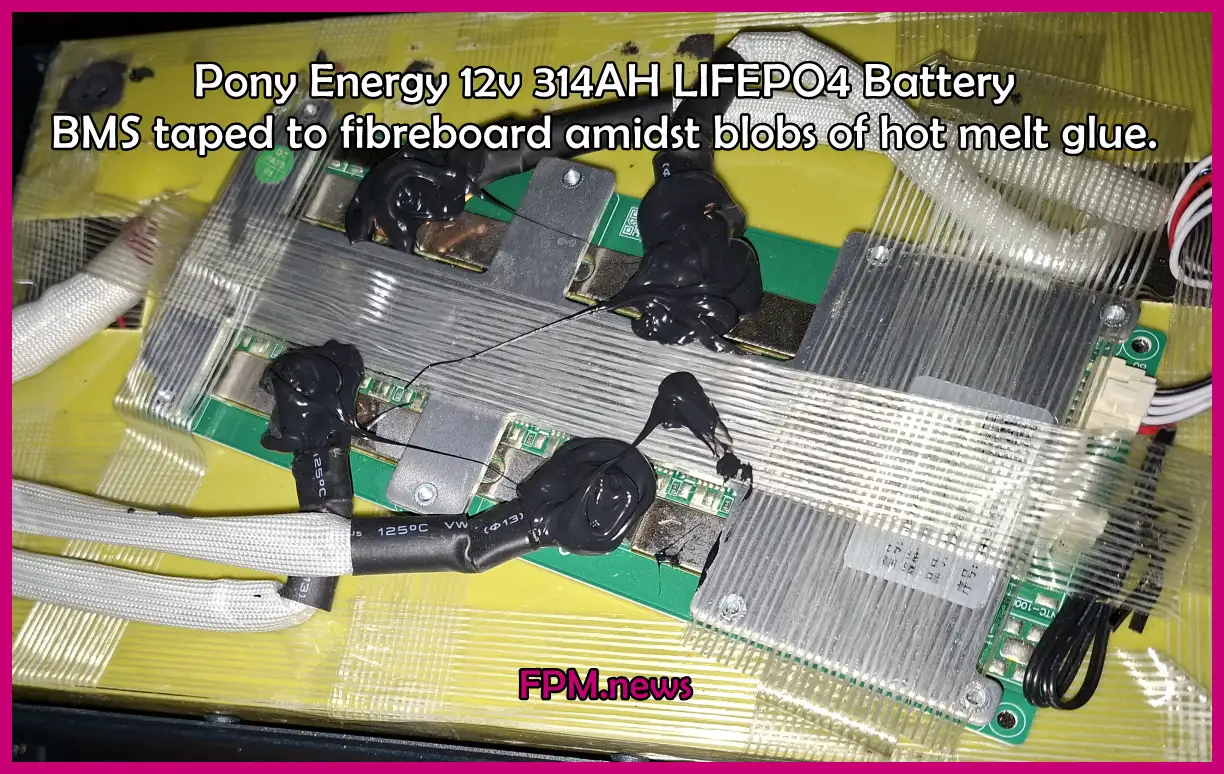
Photo Credit: Sharon Santiago
Art, cropping, by Rosa Yamamoto / FPM.news
Instead of being secured to a rigid bracket or standoff tray, the BMS circuit board and its aluminum heatsink are held onto the yellow fiberboard cell wrap solely with strips of filament strapping tape.
Under any vibration, transport movement, or heat cycling, tape adhesive softens and lets the board shift against live busbars.
Globs of Black Hot-Melt Adhesive Over High-Current Terminals
Four thick blobs of black thermoplastic glue-gun adhesive are smeared directly over the heavy-gauge power cable lugs (125°C heat-shrink) where they meet the BMS pads.
Low-temp hot-melt glue softens and pools well below the operating temperature of stressed MOSFETs and high-current lugs—which explains the melted strings and pooled drips visible across the board and yellow wrap.
Unsecured NTC Temperature Sensor
At the bottom left (NTC-100), the black temperature probe leads are coiled loosely right on the edge of the BMS rather than epoxied onto the center of the cell block. That means the BMS is reading ambient air or heatsink warmth instead of actual internal cell temperature.
Exposed Live Pads and Tight Bend Radii
The braided fiberglass-sleeved power cables enter at sharp angles with messy adhesive strings trailing across exposed surface-mount components.
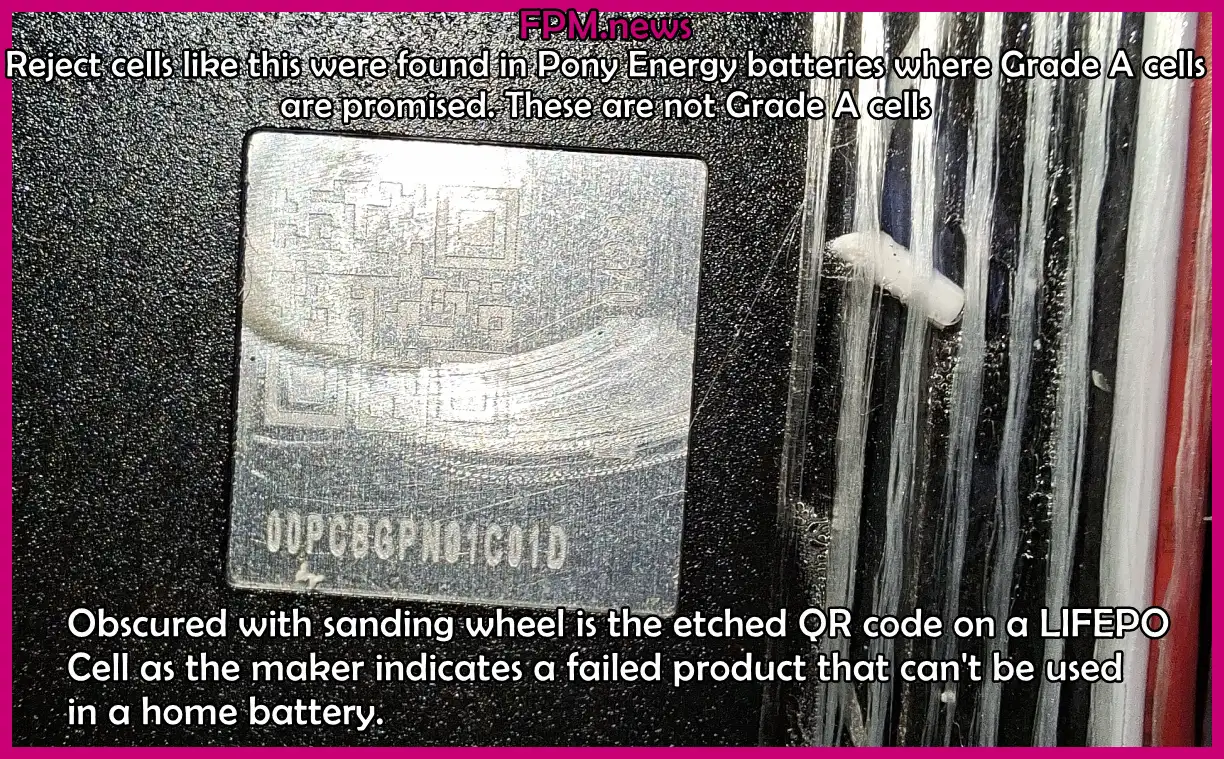
Says Pony Energy: “Hello, regarding the worn QR code on the battery you mentioned, this is because the battery cells have sales restrictions in some regions, so the QR code will be worn off before leaving the factory. Otherwise, the product may not be allowed to be sold in your region.” Manufacturers of cells say, however, they grind off the QR codes to indicate a cell pulled from the production line because it failed tests.
In this close-up photo, the Data Matrix QR code on the metal plate is heavily scratched and scored across the center. Battery factories and resellers intentionally grind or scratch off original QR codes on Grade B, factory-rejected, or used cells to hide their origin and void manufacturer traceability
Pony Energy 12v 314AH LIFEPO4 Battery Battery Cells have Identification scored out, and removed. Photo Credit: Sharon Santiago
Art, cropping, by Rosa Yamamoto / FPM.news
Failed 314AH 12.8 V LIFEPO Battery Cell. Obscured with a sanding wheel, Factory QR CODES on reject cells like this were found in Pony Energy batteries sold from the Lazada platform where Grade A cells are promised. These are not Grade A cells but factory rejects following quality control tests according to several makers of cells. Some manufacturers may scrape off QR codes to avoid detection of counterfeit or downgraded stock. This practice is often seen in the secondary market where cells are resold as refurbished or used stock. Budget battery builders may then assemble the untraceable rejected cell batteries and sell them as if they were commercially useable.
It is crucial for consumers to verify the authenticity of their LiFePO4 battery cells by checking the QR codes and other documentation provided by the manufacturer. This ensures that they are purchasing high-quality, genuine products that meet industry standards and safety regulations.
Complaint to Lazada-Pony-Energy-12v-314-AH-Battery-NOT-CHARGING
Independent tear-down inspections of solar battery packs sold across the Philippines reveal a disturbing pattern.
Factory Rejects Sold as New
Industry technicians examining the internal cells of several low-cost units confirmed that the packs are built from mismatched, factory “B-grade” or engineering-reject cells—components never intended for commercial home use.
Stripped-Down or Counterfeit Electronics
Even when a unit contains decent raw storage cells, assemblers frequently cut corners on the most critical safety component: the Battery Management System (BMS). Missing temperature sensors, undersized circuits, and fake balancing boards leave the battery unable to deliver its advertised capacity—or worse, unprotected against dangerous overheating.
Third Party Advice Given to A Customer
Seeing the photos from this 12V 314Ah Pony Energy LiFePO4 battery, the assembly shown is completely unacceptable and presents a severe fire hazard.
On a 314Ah battery, which is capable of delivering massive amounts of current, the internal connections need to be mechanically sound and low-resistance. What is shown in these photos violates basic electrical safety standards.
Critical Safety Flaws Identified in the Photos
Cold Solder Blobs on High-Current Terminals. In the first photo, thick gauge cables are attached directly to a copper busbar using massive, poorly flowed blobs of solder. Because copper wicks heat away rapidly, the technician could not get the busbar hot enough to flow the solder properly, resulting in a cold solder joint. Under high-amperage loads (like running an inverter), this high-resistance joint will generate intense heat, potentially melting the solder and causing the live cables to pop off and arc inside the sealed battery case.
•Heat-Damaged Insulation. Looking closely at the black heat-shrink tubing and white fiberglass sleeving in the first photo, the insulation is visibly charred and melted from the prolonged heat required to melt that much solder.
Improper Terminal Modification:
The circular ring mark on the left side of the copper busbar in the first image suggests a welded stud or bolt was either sheared off, ground down, or missing, and someone bypassed the proper mechanical lug connection by just soldering the wires onto the flat plate.
Salvaged/Recycled BMS
In the second photo, the Battery Management System (BMS) shows torn remnants of double-sided foam tape and cardboard/fish-paper residue on its aluminum heatsink. This strongly indicates the BMS was ripped out of a previously assembled or defective pack and reused. Additionally, the ring lugs visible inside the yellow-wrapped cell pack look bent, poorly crimped, and heavily oxidized or heat-stressed.
Recommended Next Steps
Do Not Use This Battery
Do not charge, discharge, or connect this battery to an inverter or solar setup. A 314Ah LiFePO4 pack stores roughly 4,000 watt-hours (4 kWh) of energy; an internal short circuit from a detached wire will cause a catastrophic fire.
Safe Storage
Until you can return or properly rebuild it, store the battery in a dry, well-ventilated area away from flammable materials, and ensure the main external terminals are covered so nothing can accidentally bridge them.

She needs her battery electricity to charge her phone, light a light, and spin a fan in the El Niño heat. A Philippines Single Mom, with the children fed, homework done kids now sleeping in bed, Mom plans her handcrafts and takes orders from customers to make some extra pesos to feed her kids. Research and art by Rosa Yamamoto. Subject woman’s identity is obfuscated in photo art to protect the woman.
Fire and Smoke Hazards in Living Spaces
When reject cells meet faulty electronics, the result isn’t just a dead battery. Families are reporting units running dangerously hot, smoking out rooms, and creating severe fire hazards right next to where children sleep.
The True Cost of Making It Safe
In our team’s technical tests, taking a ₱19,000–₱24,000 unit with salvageable raw cells (in this case they are not) and rebuilding it to genuinely safe standards—upgrading the BMS and custom-rewiring every connection—pushed the real cost to nearly ₱28,000–₱30,000, requiring master-level technical labor that almost no ordinary buyer can access. Worse still, some reject-built models cannot be safely repaired at all.
The Warranty Runaround.
• “0.1–0.2V difference is normal”—In reality, 0.002 might be normal but not 200mv (0.2). Normal LFP cell-to-cell spread at full charge is 10–20 mV. A 100–200 mV spread means one cell has significantly higher IR, lower capacity, or is defective. That’s not “natural variation,” that’s a bad cell or bad matching.
• “Rest 3–7 days and the BMS will balance” — Passive balancing on massive 314AH batteries is a non-starter. A passive BMS Balancer can only move a few milliamps of charge. It cannot close a 200 mV gap in a 314 Ah pack in a week. That’s a non-answer designed to make you wait and give up.
• “Capacity is determined by Ah, not voltage” — True in isolation, but irrelevant here. If the BMS hits its 13.8 V (3.45 V/cell) charge limit because one lagging cell won’t come up, the pack is not fully charged. You are literally losing Ah every cycle. That’s the whole problem.
Acknowledged Pony Energy closure and warranty implications
“Three months to wait for a replacement battery or warranty repairs” → “we can’t get cells” → website gone → domain up for sale at a ridiculous price because they stopped paying GoDaddy. That timeline is classic slow-bleed. That’s not a company with a supply problem, that appears to be a company that ran out of cash and is quietly winding down. Batteries looking like these do appear to be built in a rushed fashion in someone’s basement with zero quality control.
Uncertified Cross-Border LiFePO4 Battery Systems (314Ah & 280Ah Classes) E-Commerce Platforms Involved: Lazada Philippines & Shopee Philippines
Exhibit A: Cell Isolation & Top-Charging Imbalance (The “Cell-Runner” Defect)
• Observed Brands: Humsienk, Pony Energy, Gentai, Watt Cycle (Production Window: Late 2025)
• Testing Parameters: Regulated bench charging via current-limiting DC power supply at a modest 0.05C to 0.1C rate.
• The Failure Mechanism. Instead of a linear, uniform voltage ascent across the internal 4S configuration, target units suffer a catastrophic BMS high-voltage cutoff lockdown between 13.6V and 13.9V.
• Engineering Diagnostic. This behavior verifies the deployment of mismatched, un-vetted, or factory-rejected B/C-grade cell tissue. Individual “cell-runners” spike past 3.65V prematurely due to severe internal resistance variations, forcing a complete safety shutdown while the remaining cell blocks sit completely uncharged.
Exhibit B: A rare case. Parallel System Voltage Collapse & Internal Short-Circuiting
• Target Unit Case Study: Gentai 12V 314Ah Pack (Lazada Order ID: 1129917140890962)
• Testing Setup: Matched parallel system configuration tied via a 63A DC circuit breaker utilizing 1.2-meter 25mm2 pure copper conductors.
The Catastrophic Failure Event
While resting stably at a system busbar voltage of 13.613V, the target unit suffered an instantaneous internal cell membrane or structure collapse. The battery dropped its terminal voltage independently and shifted from a normal charging state into a massive, uncontrolled power sink, drawing between 50A and 70A of current directly from the parallel sister batteries and solar array.
Note: Unlike the other sellers, Gentai issued an immediate refund for the item. Other Gentai batteries have performed brilliantly in the past.
Public Safety Risk Analysis
An internal micro-short drawing 50A-70A bypasses standard high-amperage array fuses (e.g., 125A MRBF) while generating extreme, rapid localized thermal dissipation. This forces the shorted cell into an unstoppable thermal runaway trajectory, creating an immediate fire and toxic gas venting hazard.
Exhibit C: Negligent Merchant Technical Advisory
Documented Vendor Instructions
Upon presentation of the volatile Bluetooth BMS cell logs, merchant technical support channels explicitly instructed a consumer to:
1. Force heavy electrical discharge loads onto a hard-locked, chemically unstable battery casing to “force-reset” the system.
2. Manually slice open factory structural casings to bypass engineered safety management cutoffs.
Regulatory Infraction
Instructing untrained end-users or homeowners to manually override a tripped BMS on a structurally compromised or internally shorted lithium pack constitutes possible criminal negligence and a direct incitement to residential property destruction and personal injury.
Recommended Regulatory Interventions for BPS/ DOE/ FTEB
1. Immediate Port-of-Entry Quarantines. Enforce immediate compliance audits on all incoming cross-border sea and air cargo containing 12V LFP packs under the Humsienk, Gentai, Pony Energy, and Watt Cycle labels.
2. Platform Liability Directives. Issue a formal cease-and-desist to Lazada and Shopee corporate compliance, requiring the immediate algorithmic delisting of merchants distributing uncertified, non-PS/ICC compliant 314Ah and 280Ah battery packs.
3. Accelerated Implementation of the May 2026 Draft Order. Transition the Draft Administrative Order into immediate effect to institute mandatory laboratory cell-matching standards for all imported Lithium Iron Phosphate cells.
What Comes Next in This Series
In the coming installments of this investigation, we will put the receipts and practical tools directly into the hands of families around the world:
Part 2 — Inside the Boxes – Additional Reports are coming
Side-by-side tear-down photographs showing what is actually wired inside ₱18,000–₱24,000 (PH Pesos) Philippine-market battery units compared to safe, global-standard builds—alongside the dated warning letters sent to regulators.
Dangerous-LIFEPO4-batteries-Warning was sent to officials 10/23/26
Part 3 — Safety Triage at Home
A visual and video guide showing the immediate warning signs of an overheating lithium pack, which units should never be opened or repaired, and how to isolate a suspect battery safely away from your family.
Part 4 — Fighting the Pay-Later Trap
Step-by-step instructions on how buyers can document defective units, invoke Republic Act No. 11967 (the Internet Transactions Act) and DTI E-Commerce rules to demand refunds, and file fire-hazard reports locally.
Part 5 — Right-Sized Power That Actually Works
How much power a household truly needs for a night light, fan, and phone/tablet—and how women’s community networks are verifying safe, honest alternatives.


